

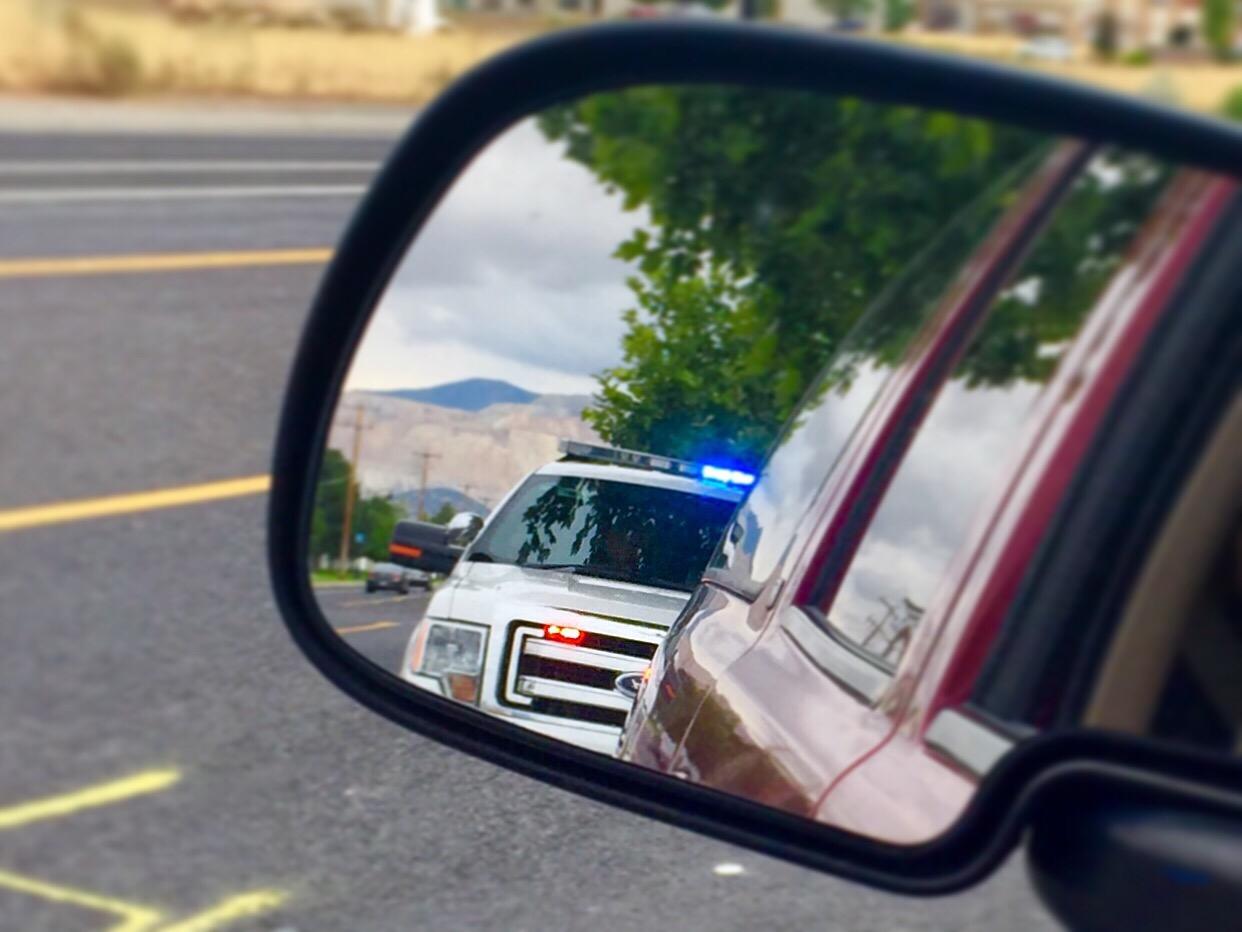
 Traffic Stop Survival Guide for New York Drivers
What to Say (and NOT Say) When Pulled Over in New York
Last reviewed by Attorney Ronald S. Cook — July 2026
Already have a ticket? Text a photo to (631) 678-8993 and we’ll tell you the points, fines, insurance risk, and your options — routine tickets often start at $300 flat, confirmed before you retain us. Or call (888) 275-2620. Available 24/7.
Getting pulled over is stressful. Most drivers hurt their own cases by talking too much. Statements like “I was only going a little over,” “I didn’t see the sign,” or “I’m sorry” sound harmless but can be treated as admissions in court.
The rule is simple: stay calm, be polite, hand over your documents, and say as little as possible.
What to Do When You See Lights Behind You
- Slow down, signal, and pull over safely as soon as you can.
- Turn off the engine. Keep your hands on the wheel.
- If it is dark, turn on the interior light.
- Do not make sudden movements or reach for anything until you explain where the documents are.
Do not argue. Do not try to litigate on the roadside.
What You Must Provide
When asked, hand over your driver’s license, registration, and proof of insurance. If your documents are in the glove box or center console, tell the officer before reaching.
That is all you are required to provide. You are not required to answer questions beyond basic identification.
What to Say During the Stop
| If the officer asks… | A safe response | Why |
|---|---|---|
| “Do you know why I stopped you?” | “No.” | Do not guess. Do not admit anything. |
| “Do you know how fast you were going?” | “Yes.” | Do not say the number. Do not explain. |
| The officer states your speed | “I see.” | You do not need to agree, disagree, or justify. |
| “Where are you coming from / going?” | “I prefer not to answer any questions.” | You are not required to answer. |
| “Have you been drinking?” | “I do not wish to answer any questions.” | Anything you say will be used. |
| “Can I search your vehicle?” | “I do not consent to any searches.” | State it clearly. If the officer searches anyway, do not physically resist — your refusal is preserved for court. |
What NOT to Say — Ever
Avoid anything that sounds like a confession, an excuse, or consent:
“I know I was speeding.” — Admission.
“I only looked at my phone for a second.” — Admission.
“I rolled through the stop sign.” — Admission.
“I didn’t see the sign.” — Not a defense, and it confirms the violation.
“I only had one drink.” — Confirms drinking before driving.
“Go ahead and search.” — Waives your Fourth Amendment rights.
“I’m sorry.” — Can be characterized as an admission.
The less you say, the fewer tools the prosecution has later.
Your Rights During a New York Traffic Stop
You have the right to remain silent beyond providing identification and required documents. You have the right to refuse consent to a vehicle search.
If you are placed under arrest, say: “I wish to remain silent and I want a lawyer.” Then stop talking.
Field Sobriety Tests vs. Chemical Tests — Know the Difference
These are two separate things with very different consequences.
Field Sobriety Tests — VOLUNTARY
Roadside coordination exercises — walk-and-turn, one-leg stand, horizontal gaze nystagmus.
These are voluntary. You can decline.
“I do not wish to perform any field sobriety tests.”
Chemical Tests — SERIOUS CONSEQUENCES
Breath, blood, or urine tests after a lawful arrest.
Under New York’s implied consent law (VTL § 1194), refusing triggers an automatic license revocation hearing at the DMV — separate from any criminal case.
The revocation applies even if you are never convicted.
Do not confuse these two. You can decline field sobriety tests. The decision on a chemical test carries serious, immediate consequences and should be evaluated by counsel. If alcohol or drugs are involved in any way, get legal advice immediately.
If You Get a Ticket
Stay polite. Accept the ticket. Do not argue on the roadside.
Do not pay the ticket before having it reviewed. Signing a ticket is not an admission of guilt. Paying it usually is — and a guilty plea can mean points on your license, fines, surcharges, DMV Driver Responsibility Assessment fees, insurance increases, and a permanent mark on your driving record. And note: New York’s point system changed on February 16, 2026 — the lookback window is longer and several violations carry more points than before, so a guilty plea costs more than it used to. Many older articles still show the outdated rules. See the February 2026 DMV point system changes.
Have Your Ticket Reviewed Before You Decide
We’ll review the charge, explain the point and insurance exposure, identify possible defenses, and give you a flat-fee quote to fight it. Routine tickets often start at $300 flat.
Call (888) 275-2620 or Text a Photo of Your Ticket to (631) 678-8993
No court appearance required in most cases | All 62 New York counties
Related: New York Points Chart (Feb. 2026) | NY VTL Codes | Traffic Ticket Defense | Speeding Tickets | Cell Phone Tickets | DWI/DWAI Defense
Last reviewed by Attorney Ronald S. Cook — July 2026
This page is for informational purposes only and does not constitute legal advice.

