

 Business Law Services in New York
Formation, Contracts, Disputes, and Transactions — Backed by an LL.M. in Taxation and an MBA.
Last reviewed by Attorney Ronald S. Cook — April 2026
Every business decision has a legal dimension — and in New York, the legal landscape is more complex than in most states. Entity formation, contract drafting, employment compliance, commercial leases, intellectual property, and dispute resolution all involve overlapping layers of state, federal, and local law. Getting it right from the start costs less than fixing it later.
Call (888) 275-2620 or text (631) 678-8993 for a free consultation. Available 24/7.
Business Formation and Entity Selection
The choice of entity affects everything: personal liability exposure, tax treatment, management structure, ability to raise capital, and exit strategy. New York adds its own wrinkles — including the LLC publication requirement (LLC Law § 206), the franchise tax and filing fee structure, and the distinction between domestic and foreign entity qualification.
Entity types we form and advise on:
- Limited Liability Companies (LLC). The most common structure for small and mid-size businesses. Formed under the New York LLC Law (Chapter 34 of the Consolidated Laws). Offers pass-through taxation and liability protection, but New York requires publication of the Articles of Organization in two newspapers designated by the county clerk within 120 days of formation (LLC Law § 206) — a requirement that catches many new business owners off guard and carries real consequences if missed.
- Corporations (C-Corp and S-Corp). Formed under the New York Business Corporation Law (BCL). C-Corps face double taxation (corporate level and shareholder level) but offer flexibility for equity compensation, multiple classes of stock, and institutional investment. S-Corp election (IRC § 1362) provides pass-through treatment but is limited to 100 shareholders, one class of stock, and specific shareholder eligibility requirements. New York requires a separate state-level S-Corp election (Tax Law § 660) — the federal election alone is not sufficient.
- Partnerships. General partnerships, limited partnerships (LP), and limited liability partnerships (LLP) are governed by the New York Partnership Law and the Revised Limited Partnership Act. Each structure allocates liability, management authority, and profit-sharing differently. A properly drafted partnership agreement is essential — without one, the default statutory rules apply, and they rarely match what the partners intended.
- Non-Profit Organizations. Formed under the New York Not-for-Profit Corporation Law (N-PCL). Obtaining and maintaining tax-exempt status under IRC § 501(c)(3) requires compliance with both federal and state requirements, including registration with the New York Attorney General’s Charities Bureau (EPTL § 8-1.4).
Entity selection is a tax decision as much as a legal one. Attorney Cook’s LL.M. in Taxation and MBA allow him to evaluate entity choice from both perspectives simultaneously — something most business attorneys and most accountants cannot do in a single engagement.
Contracts and Commercial Agreements
A contract is only as good as its drafting. Ambiguous terms, missing provisions, and unenforceable clauses create disputes that cost far more than the contract cost to draft properly. We draft, review, and negotiate:
- Operating agreements and partnership agreements — governance, capital contributions, profit allocation, buyout provisions, dissolution triggers, and dispute resolution mechanisms. The operating agreement is the most important document an LLC will ever have — and many businesses operate without one or with a template that does not reflect their actual arrangement.
- Employment agreements — compensation, benefits, termination provisions, severance, and post-employment obligations. New York imposes specific requirements on certain employment terms, including wage payment timing (NYLL §§ 191, 195) and final pay rules.
- Non-compete and restrictive covenant agreements — New York courts evaluate non-competes under a reasonableness standard (time, geography, scope of restricted activity, hardship to the employee, and impact on the public). Overbroad non-competes are routinely struck down. Drafting an enforceable restrictive covenant requires understanding how New York courts actually analyze them — not just copying a template.
- Non-disclosure agreements (NDAs) — protection of trade secrets and confidential information. Properly drafted NDAs define what constitutes confidential information, set a reasonable duration, and specify remedies including injunctive relief.
- Vendor, supplier, and service agreements — payment terms, delivery obligations, warranties, limitation of liability, indemnification, and termination rights.
- Commercial lease agreements — rent, escalation clauses, CAM charges, build-out and improvement provisions, assignment and subletting rights, default and cure provisions, and surrender obligations. Commercial leases in New York are heavily negotiated documents — the landlord’s form lease is a starting point, not a final product.
- Buy-sell agreements — mechanisms for the orderly transfer of ownership interests upon death, disability, retirement, or voluntary departure. Funded with life insurance, installment payments, or a combination. Valuation methodology (book value, formula, appraisal) must be agreed upon in advance.
Business Disputes and Litigation
When a business dispute cannot be resolved through negotiation, it becomes litigation — and New York business litigation moves fast. We handle:
- Breach of contract. The core of most commercial disputes. New York applies a six-year statute of limitations (CPLR 213(2)) and requires proof of the agreement, performance by the plaintiff, breach by the defendant, and resulting damages. Liquidated damages, limitation of liability clauses, and contractual indemnification provisions are routinely contested.
- Partnership and LLC member disputes. Deadlock, fiduciary duty breaches, unauthorized self-dealing, squeeze-outs, and judicial dissolution proceedings (BCL § 1104, LLC Law § 702). These disputes often involve derivative claims, accounting demands, and requests for the appointment of a receiver.
- Shareholder disputes. Minority shareholder oppression (BCL § 1104-a), breach of fiduciary duty by directors or controlling shareholders, inspection of books and records (BCL § 624), and involuntary dissolution. New York’s close corporation case law provides remedies specifically designed for disputes in closely-held companies.
- Fraud and misrepresentation. Common law fraud, negligent misrepresentation, and statutory claims under GBL § 349 (deceptive business practices). Fraud claims carry a six-year statute of limitations from commission or two years from discovery (CPLR 213(8), 203(g)).
- Employment disputes. Wage and hour claims (NYLL Article 6), wrongful termination, discrimination and retaliation claims (Executive Law § 296, NYC Admin. Code § 8-107), and non-compete enforcement or defense.
- Intellectual property disputes. Trademark infringement (Lanham Act § 43(a), GBL § 360-l), copyright infringement (17 U.S.C. § 501), trade secret misappropriation (Defend Trade Secrets Act, NY common law), and unfair competition.
Employment Law Compliance
New York employment law imposes obligations that go beyond federal requirements. Businesses operating in New York must comply with:
- Wage and hour rules. New York minimum wage (currently higher than the federal minimum), overtime requirements, spread-of-hours pay, tip credit rules, frequency of payment requirements (NYLL § 191), and wage notice and pay stub requirements (NYLL § 195). Violations carry statutory penalties including liquidated damages of up to 100% of unpaid wages.
- Paid leave. New York Paid Family Leave (Workers’ Compensation Law Article 9), New York Paid Sick Leave (NYLL § 196-b), and — for NYC employers — the Earned Safe and Sick Time Act (NYC Admin. Code § 20-911 et seq.).
- Anti-discrimination. The New York State Human Rights Law (Executive Law § 296) and the NYC Human Rights Law (Admin. Code § 8-107) are broader than their federal counterparts (Title VII, ADA, ADEA) in several respects — including the standard for harassment claims, the definition of “employer,” and the scope of protected categories.
- Hiring and termination. New York restricts salary history inquiries, criminal history inquiries (NYC Fair Chance Act), and non-compete agreements. Proper onboarding documentation, handbook policies, and termination procedures reduce litigation exposure.
Mergers, Acquisitions, and Business Sales
Buying or selling a business is one of the most consequential transactions an owner will ever undertake. The deal structure — asset purchase vs. stock/membership interest purchase — determines tax treatment, liability transfer, and third-party consent requirements. We handle:
- Due diligence — financial, legal, tax, employment, regulatory, and IP review of the target business.
- Deal structuring — asset vs. equity, allocation of purchase price (IRC § 1060), installment sale treatment (IRC § 453), earnout provisions, and seller financing.
- Transaction documents — letters of intent, asset/stock purchase agreements, representations and warranties, indemnification, escrow arrangements, non-compete and transition services agreements.
- Bulk Sales Act compliance — New York’s Bulk Sales Act (UCC Article 6, as adopted) may apply to certain asset sales and requires notice to creditors.
- Post-closing matters — entity dissolution, final tax returns, UCC filings, and regulatory notifications.
Attorney Cook’s combined tax and business background is directly relevant here — deal structure determines tax liability, and tax liability often determines whether the deal makes financial sense.
Intellectual Property Protection
- Trademark registration — federal (USPTO) and New York State (Department of State) trademark applications, clearance searches, and prosecution. A registered trademark provides nationwide constructive notice and the right to use the ® symbol.
- Copyright protection — registration with the U.S. Copyright Office (required before filing an infringement action), licensing agreements, and DMCA takedown procedures.
- Trade secret protection — identification and classification of trade secrets, implementation of reasonable protective measures, NDA programs, and litigation under the Defend Trade Secrets Act (18 U.S.C. § 1836) and New York common law.
- Licensing agreements — terms of use, royalty structures, exclusivity, territory restrictions, and termination provisions.
Why Clients Choose Ronald S. Cook, P.C.
- LL.M. in Taxation — every business decision has a tax dimension. Attorney Cook evaluates both simultaneously.
- MBA — financial modeling, valuation, and business strategy inform the legal analysis.
- Prior Wall Street experience — a background in finance that most business attorneys lack.
- Thousands of five-star reviews from clients across New York.
- Available 24/7.
- Suffolk and Nassau County offices — Smithtown and Garden City.
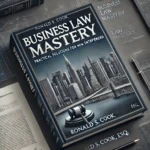
Attorney Ronald S. Cook is the author of Business Law Mastery: Practical Solutions for New York Entrepreneurs, available on Amazon.com. View all books by Attorney Cook on Amazon.
Free Consultation — Call Now
Whether you are forming a new business, negotiating a contract, resolving a dispute, or buying or selling a company, contact us to discuss your situation.
Call (888) 275-2620 · Available 24/7
Free consultation · Suffolk and Nassau County · All 62 New York counties
Related: Tax Law · Estate Planning · Civil Litigation · Real Estate · Bankruptcy & Debt
Last reviewed by Attorney Ronald S. Cook — April 2026
This page is for informational purposes only and does not constitute legal advice.

